



AI Image Prompt Writing 2026: Master the Art & Science of Perfect Prompts
The Art and Science of AI Image Prompt Writing: Comprehensive Framework, Advanced Techniques, and Professional-Grade Strategies for Exceptional Results
Prompt writing represents contemporary creativity's most underestimated skill. Most users treat prompts as casual descriptions—vague instructions hoping AI somehow infers their vision. Yet prompt engineering has become genuine discipline distinguishing exceptional results from mediocre outcomes.
The distinction matters profoundly because AI image systems operate through pattern recognition and probabilistic generation. Vague prompts produce vague results reflecting training data's statistical averages. Specific, well-structured prompts guide systems toward your actual vision by providing explicit directional information across multiple dimensions.
This comprehensive guide explores prompt engineering as systematic practice—providing structural frameworks, advanced techniques, platform-specific optimization, and iterative methodologies that transform casual experimentation into reliable excellence.
Foundational Architecture: The Three-Pillar Prompt Structure
Exceptional prompts consistently follow structural patterns organizing information into distinct components, each serving specific communicative function.
Pillar One: Subject Definition
The subject represents your prompt's foundation—the primary focus of generated imagery. Rather than vague references, subjects require explicit, concrete specificity.
Ineffective Approach: "Create something beautiful"
Effective Approach: "A 40-year-old woman with long auburn hair, wearing a cream-colored wool sweater, standing in a sunlit studio"
The difference between these demonstrates subject specificity's power. First prompt lacks concrete reference; system defaults to generic statistical patterns. Second provides sufficient detail that system comprehends exact visual target.
Subject Specification Framework:
Identity: What is the primary entity? (person, object, animal, landscape, scene)
Characteristics: Physical details specific to this instance (age, color, texture, size, material)
Expression/State: Current condition, emotion, or activity
Position: Spatial placement and orientation
Example comprehensive subject: "A weathered wooden sailboat, paint peeling, rope tangled on deck, listing slightly to port, abandoned in shallow water at sunrise"
This specificity—compared to simply "sailboat"—guides generation toward intentional visual direction rather than generic default.
Pillar Two: Context and Environment
Context situates your subject within meaningful setting, preventing visually isolated results disconnected from intended environment.
Environmental Specification Includes:
Location: Specific places rather than generic descriptions
Background: What surrounds the subject?
Scale: How does subject relate to surrounding space?
Proximity: How close is the viewpoint?
Rather than: "A woman outdoors"
Specify: "A woman standing alone on a windswept cliff overlooking the Atlantic, storm clouds gathering behind her, crashing waves visible below"
Context doesn't require elaborate detail—focused specification of key environmental elements suffices. The storm, cliff, ocean all participate in creating mood and visual coherence.
Pillar Three: Artistic Direction and Aesthetic
Style specification guides the visual language—how the subject and context should be rendered rather than merely what they are.
Style Components:
Medium: Photography, painting, illustration, digital art, sculpture?
Artistic Movement: Impressionism, surrealism, art deco, cyberpunk, renaissance?
Photography Style: Photojournalism, fashion editorial, architectural, macro, landscape?
Cinematographic Approach: Film noir, romantic comedy, documentary, dreamlike?
Quality Modifiers: High definition, cinematic, detailed, painterly, minimalist?
Unified Prompt Example:
"A woman standing alone on a cliff overlooking the Atlantic, storm clouds gathering behind her. Photograph in the style of contemporary fashion editorial, shot on Canon 5D with 85mm lens, golden hour lighting despite approaching storm, moody atmospheric quality. Cinematic composition with subject positioned lower-left, dramatic tonal range with warm skin tones contrasting cool storm tones."
This structure—subject + context + artistic direction—consistently produces superior results compared to unstructured description.
Advanced Specification Techniques: Precision Beyond Basics
Beyond foundational structure, advanced practitioners employ sophisticated techniques extracting maximum capability from generation systems.
Technique #1: Technical Camera Language
While beginner prompts focus on subject, professional prompts include photographic specifications guiding technical rendering.
Effective Camera Specifications:
"Shot on Hasselblad 907X with 80mm Carl Zeiss lens, f/2.8 aperture, 1/125 shutter speed"
"Wide-angle 28mm perspective, f/22 deep depth of field"
"Macro photography, extreme close-up, shallow depth of field"
"Aerial photography from 500 feet altitude"
These specifications communicate not merely technical preferences but shape entire compositional and lighting outcome. Shallow depth of field prompts differ fundamentally from deep field alternatives. Wide-angle perspective differs qualitatively from telephoto compression.
Professional photographers recognize that camera specifications communicate artistic intent—not arbitrary technical preferences. AI systems trained on photographic documentation understand these correlations, employing them to guide generation toward specified aesthetic.
Technique #2: Explicit Lighting Specification
Lighting determines mood profoundly. Rather than hoping for favorable lighting, professionals specify explicitly.
Lighting Specification Examples:
"Golden hour sunlight from side, long shadows stretching across ground, warm amber tones"
"Cool blue moonlight, shadows without fill light, high-contrast chiaroscuro"
"Soft diffused studio lighting, minimal shadows, even illumination"
"Dramatic rim lighting from behind, subject silhouetted against bright background"
Comparative example:
Vague: "Well-lit portrait"
Specific: "Portrait with warm window light from left, soft shadow gradation across face, subtle catch light in eyes, overall warm color temperature suggesting afternoon interior light"
The specific prompt guides AI toward intentional mood and lighting quality. Vague prompt produces generic "adequately lit" output.
Technique #3: Color Palette Specification
AI systems don't naturally infer color preferences from limited specification. Explicit color guidance dramatically improves results.
Color Specification Approaches:
Direct naming: "Warm color palette with oranges, golds, and warm earth tones"
Reference: "Color graded similar to Kodachrome film stock, warm faded tones"
Emotional association: "Moody blue-teal color palette suggesting melancholy"
Atmospheric: "Desaturated cool colors with occasional warm accent highlights"
Comparative example:
Vague: "A portrait with good colors"
Specific: "Portrait with warm peachy skin tones, cool background colors (sage green and dusty blue), golden-hour quality lighting that saturates warm tones while slightly desaturating background"
Technique #4: Compositional Language
Composition matters as much as subject. Professional prompts specify framing and perspective deliberately.
Compositional Specifications:
"Rule of thirds composition, subject positioned lower-left"
"Centered symmetrical framing, formal balanced composition"
"Dutch angle tilted frame suggesting unease"
"Close-up framing cropping subject tightly"
"Wide establishing shot showing expansive environment"
"Layered depth with foreground, middle ground, background elements"
These specifications prevent default centered, balanced framing, instead guiding toward intentional compositional choices.
Technique #5: Emotional and Atmospheric Language
Abstract emotional descriptors guide systems toward mood and atmosphere—subtle qualities that distinguish professional from amateur output.
Emotional Descriptors:
"Contemplative, introspective mood"
"Energetic, playful, joyful atmosphere"
"Melancholic, nostalgic, wistful feeling"
"Mysterious, dreamlike, surreal quality"
"Tense, foreboding, ominous atmosphere"
These emotional dimensions shouldn't replace specific details but complement them: "Contemplative elderly man, warm lighting, soft focus background, muted earth-tone color palette, introspective facial expression, melancholic nostalgic mood."
Platform-Specific Optimization: Tailoring Prompts for Unique Systems
Different platforms respond differently to identical prompts. Understanding platform-specific strengths enables optimization.
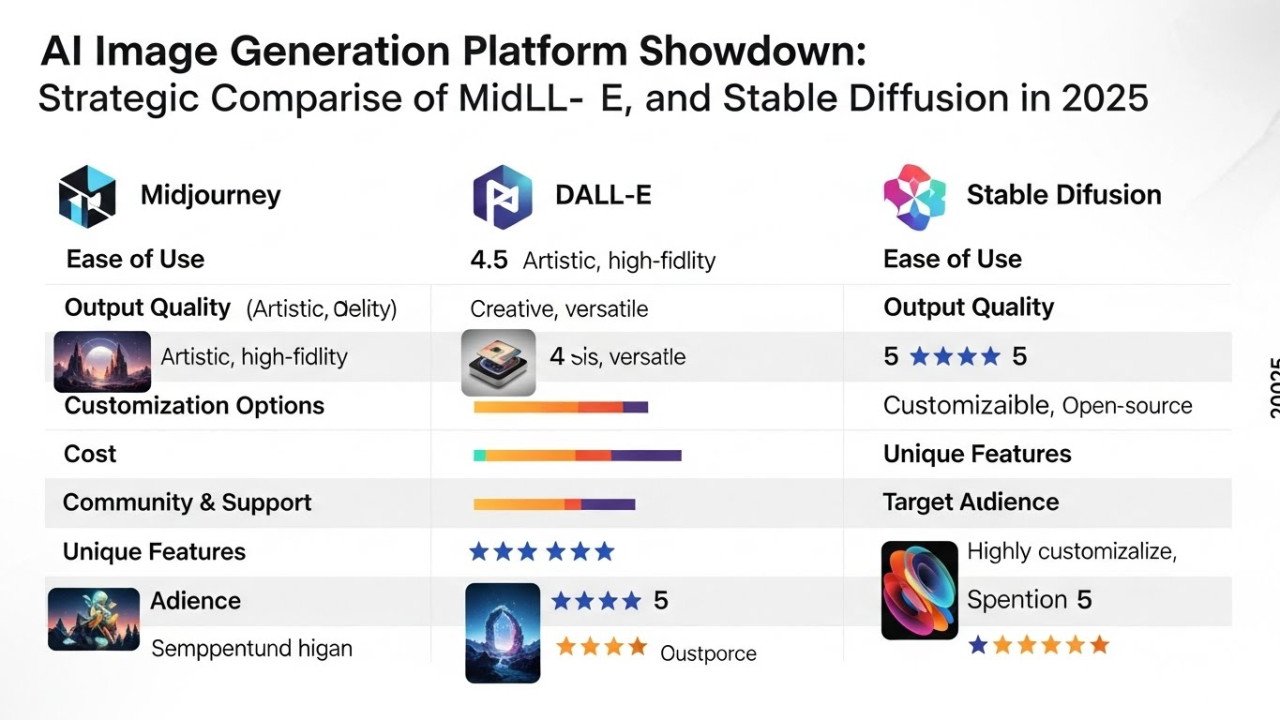
DALL-E 3: Natural Language Mastery
DALL-E excels at understanding conversational, natural language descriptions. Rather than keyword optimization, DALL-E prefers complete sentences and paragraph-form prompts.
DALL-E-Optimized Approach:
"Create a photograph of a woman standing on a misty bridge at dawn. She's wearing a vintage wool coat in muted blue, looking toward the horizon. The lighting is soft and diffused, with fog swirling around the bridge structure. The mood is contemplative and melancholic. The color palette is cool blues and grays with subtle golden light breaking through fog. Shot with 50mm lens, shallow depth of field softening the bridge structure behind her."
DALL-E processes this conversational description effectively, understanding spatial relationships, emotional intent, and technical specifications through natural language.
Midjourney: Concise High-Signal Phrases
Midjourney excels with shorter, high-signal keyword phrases rather than paragraph descriptions. Punctuation, structure, and parameter commands optimize results.
Midjourney-Optimized Approach:
"woman on misty bridge dawn, vintage blue wool coat, contemplative expression, soft diffused lighting, cool blue-gray color palette with golden light breaking through fog, 50mm shallow depth of field, cinematic, melancholic mood --ar 16:9 --s 100"
Notice: concise phrases, comma separation, specific parameters, no flowery description. Midjourney responds better to this structure than conversational alternatives.
Stable Diffusion: Parameter-Intensive Control
Stable Diffusion benefits from technical parameter manipulation complementing prompt specification.
Parameter Optimization:
Guidance Scale (5-12): Lower values enable creativity; higher values enforce prompt adherence
Sampling Steps (50-100): More steps improve quality but increase processing time
Seed Values: Fixed seeds enable reproducibility for A-B testing
Negative Prompts: Explicitly exclude unwanted elements
Stable Diffusion Workflow:
Prompt: "woman on misty bridge dawn, vintage coat, contemplative, soft lighting, cool color palette"
Parameters: Guidance 7, Steps 75, Seed [fixed value]
Negative prompt: "blurry, distorted, extra fingers, unnatural proportions"
This combination—detailed prompt + optimized parameters + negative specification—produces superior results than prompt alone.
The Iteration Framework: Systematic Refinement Methodology
Professional prompt engineering recognizes that exceptional results rarely emerge from single generation. Systematic iteration drives toward excellence.
Phase 1: Generation and Evaluation
Generate 4-6 variations with your initial prompt. Rather than selecting "best," analyze what succeeded and what failed.
Evaluation Questions:
Which variations moved closest to your vision?
What unexpected elements surprised positively?
Which elements clearly failed?
Did lighting, composition, or subject fail most significantly?
Did any variations suggest promising alternative directions?
Phase 2: Analysis and Hypothesis Development
Based on evaluation, form hypotheses about what prompt modifications would improve results.
Hypothesis examples:
"Adding specific lighting language might improve mood and quality"
"Emphasizing compositional positioning could fix awkward framing"
"More explicit color specifications would produce intended palette"
"Platform-specific parameter adjustment might help tremendously"
Phase 3: Targeted Refinement
Modify prompts based on hypotheses. Rather than wholesale rewrites, surgical modifications test specific changes.
Initial Prompt: "Woman on misty bridge, vintage coat, contemplative"
Hypothesis: Better lighting specification improves mood
Refined Prompt: "Woman on misty bridge, vintage coat, contemplative. Soft diffused dawn light, golden hour quality despite early morning, warm light breaking through mist"
Phase 4: Regeneration and Evaluation
Generate variations with refined prompt. Compare results to previous generation, noting improvements or regressions.
Phase 5: Iteration Continuation
Continue iterating based on results, progressively refining toward vision. Most professional work requires 5-8 iteration cycles.
This methodology transforms prompt engineering from trial-and-error to systematic craft—each cycle teaches you how specific prompt modifications influence output.
Reference Images and Visual Inspiration
Many platforms enable image reference—uploading visual inspiration guiding generation toward desired aesthetic.
Reference Usage Strategies
Style Reference: Upload image with desired visual style, specifying "use similar style and lighting but with [different subject]"
Composition Reference: Upload image with compositional approach you want to replicate with different subject matter
Color Palette Reference: Specify "use color palette similar to this reference image"
Explicit Instruction: "This reference shows the exact mood and lighting I want, but photograph [different subject] in similar style"
Reference images prove particularly valuable for communicating subtle qualities difficult to articulate—specific color palettes, lighting approaches, compositional preferences.
Common Mistakes and Corrections
Understanding typical errors prevents wasted generations.
Mistake: Vague Abstract Concepts as Subjects
Problem: "Create an image representing hope and aspiration"
Why It Fails: Hope and aspiration are abstract. AI systems struggle translating abstractions directly.
Solution: Translate abstraction into concrete imagery. "A young person reaching toward sunlight breaking through clouds" conveys hope more effectively than abstract instruction.
Mistake: Conflicting Instructions
Problem: "Photorealistic but painterly, dramatic but subtle, vibrant but muted colors"
Why It Fails: Contradictory specifications confuse systems rather than guiding them.
Solution: Choose primary aesthetic. If photorealism matters most, don't ask for painterly quality. These represent different aesthetic goals.
Mistake: Excessive Detail
Problem: Prompts listing dozens of specifications, each receiving equal emphasis
Why It Fails: Excessive specification overwhelms processing. Later specifications often override earlier ones.
Solution: Prioritize ruthlessly. Include 5-8 essential specifications, omitting lower-priority details.
Mistake: Ignoring Platform Strengths
Problem: Using keyword-dumping approach for DALL-E, which prefers conversational language
Why It Fails: Misalignment between prompt style and platform strengths produces suboptimal results.
Solution: Match prompt style to platform. DALL-E prefers sentences. Midjourney prefers phrases.
Advanced Strategy: Prompt Engineering as Documentation
Professional practitioners maintain prompt libraries—documented successful prompts organized by category, enabling rapid reference and iteration.
Documentation Structure:
Category: Portraits - Editorial Fashion
Successful Prompt:
"Woman, 28 years old, angular features, long dark hair,
professional editorial makeup. Wearing minimalist dark blazer.
Neutral studio background, white or light gray.
Professional portrait lighting with subtle shadows.
Shot on Hasselblad, 80mm lens, f/2.8.
Professional fashion editorial style, editorial makeup,
cool color palette with warm skin tones.
High fashion, minimalist, contemporary aesthetic."
Platform: Midjourney v6.1
Guidance Scale: 7
Key Success Factors: Specific age, clear styling, explicit lighting,
professional editorial language
Variations That Worked: Adding specific ethnicity improved diversity
representation. Adding specific hair texture improved realism.
Variations That Failed: Attempting extreme angles degraded quality.
Excessive detail competed with main subject.
This documentation enables rapid iteration—you reference previous successful approaches, understanding what worked and why, rather than reinventing methodology repeatedly.
Frequently Asked Questions: Prompt Writing Practicalities
How long should prompts be?
Varies by platform. DALL-E handles 100+ words effectively. Midjourney excels with 20-40 word focused prompts. Stable Diffusion handles 50-100 word prompts well. Shorter, high-signal prompts generally perform better than exhaustively detailed ones.
Should I use grammatically correct language?
Not required. Both grammatical sentences and keyword phrases work. Choose what feels natural for your platform. DALL-E forgives grammatical imperfection if meaning is clear. Midjourney prefers simplified phrases.
How specific about people's appearance should I be?
Specific ethnicity, age range, hair color, and distinctive features improve results. However, avoid excessive stereotyping. "Woman, age 40s, with warm brown skin, natural hair, authentic expression" works better than vague "woman."
What about copyright concerns with reference images?
Reference images shouldn't depict anything copyrighted directly. Instead, use them for style and mood guidance. Reference is inspirational, not literal copying.
How many iterations typically needed?
Most professionals require 3-5 cycles. Complex imagery may require 10+. Simple subjects might achieve success in 1-2. Quality improves with each iteration if methodology is systematic.
Should I share my best prompts?
Sharing enables learning and community collaboration. Many successful prompt engineers publish prompts publicly. However, genuinely unique specialized prompts may warrant protection.
Can I use negative prompts everywhere?
Most modern systems support negative prompts. They're particularly valuable for excluding common AI artifacts. Use them strategically—"avoid: distorted hands, unnatural anatomy" rather than listing dozens of exclusions.
How do I know when a prompt is "good enough"?
When generated results consistently meet your quality standards across multiple variations, your prompt likely communicates clearly. Consistent quality across generations indicates effective prompt structure.







Comments (0)
No comments found