


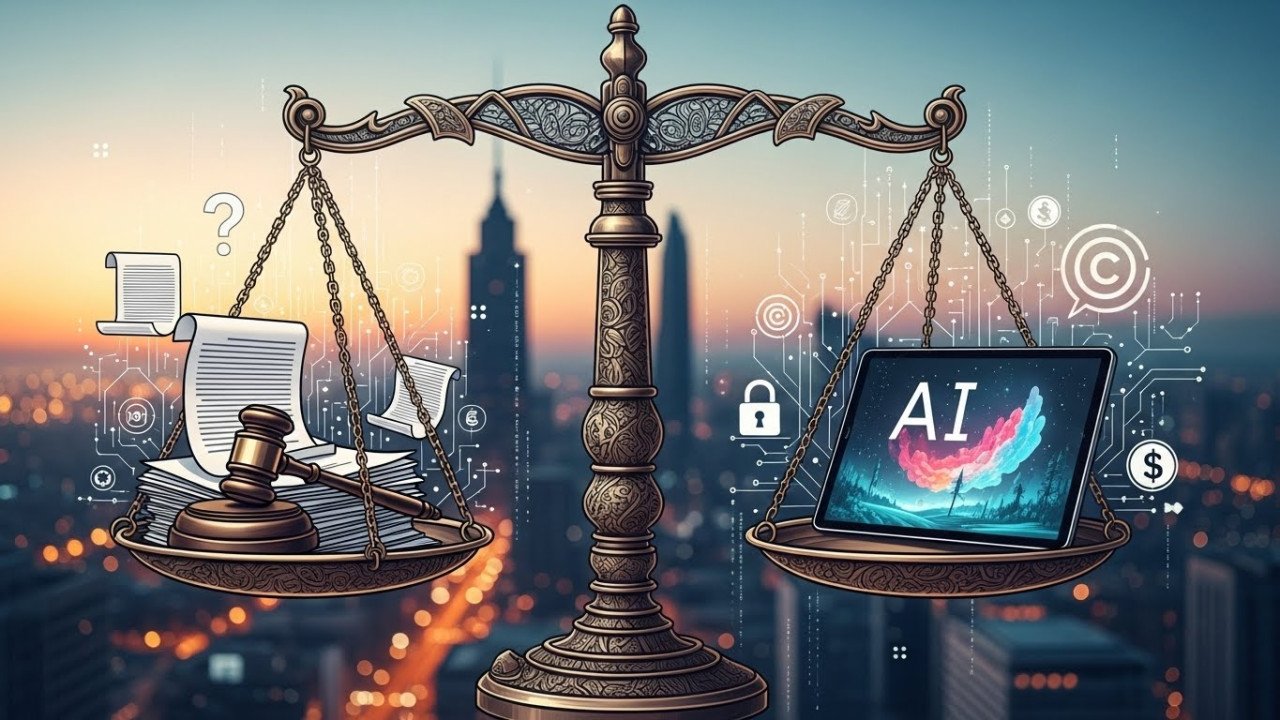
Copyright and Legal Risks in AI Image Generation: What Businesses Need to Know Before Using AI Art
Every AI-generated image carries hidden legal liability. The copyright status is unclear. Training data sources are often unknown. And if you get sued, your insurance might not cover you.
Businesses integrating AI image generation into their workflows are operating in a legal gray zone. The rules are evolving. Lawsuits are pending. But waiting for perfect legal clarity is no longer an option—companies need to understand the risks now.
The Core Legal Question: Who Owns an AI-Generated Image?
This question remains unanswered by law in most jurisdictions. The U.S. Copyright Office, EU Parliament, and UK Intellectual Property Office have all signaled that AI-generated images without human creative input may not qualify for copyright protection.
What does this mean practically? If an AI image isn't copyrightable, theoretically, anyone could use it. But the opposite interpretation is also possible: if an image isn't copyrightable, you can't claim ownership either, creating massive problems for commercial use.
Most legal experts now assume that AI-generated images with significant human prompt engineering and creative direction may qualify for copyright. Images created with minimal human input likely don't. The boundary is fuzzy and untested in court.
Training Data and the Copyright Infringement Problem
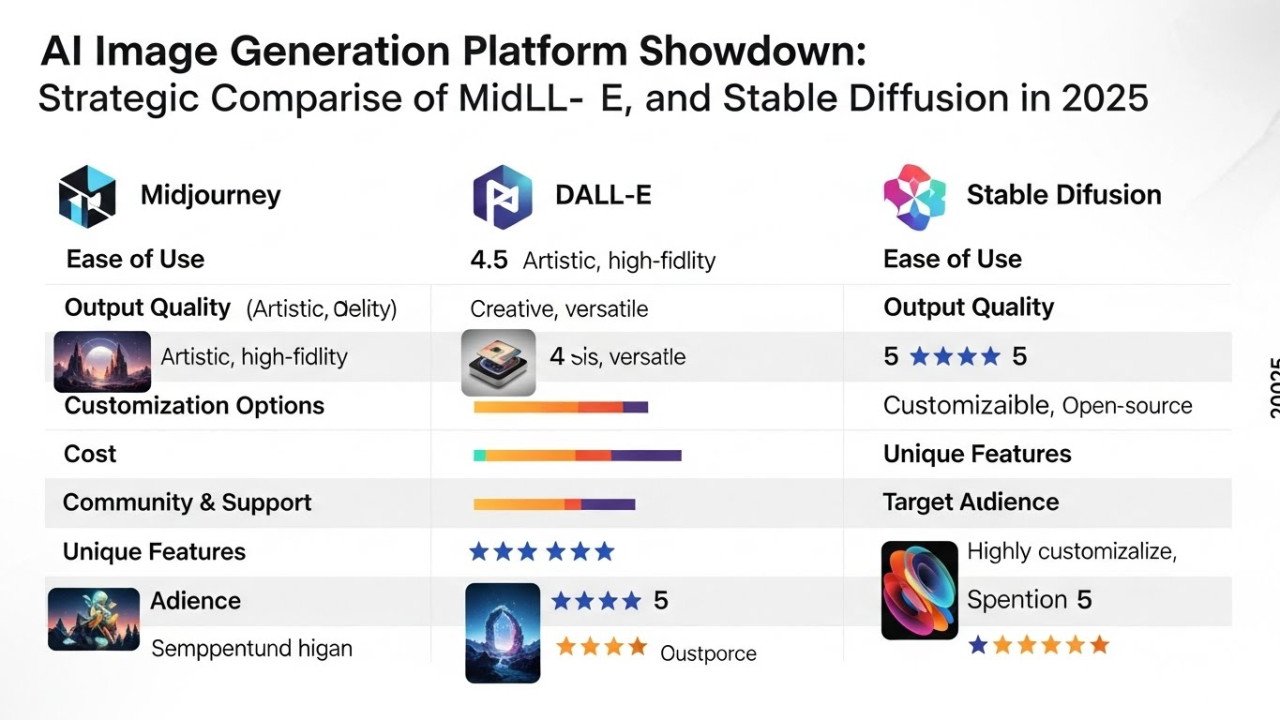
AI image generators are trained on billions of images scraped from the internet. Some of these images are copyrighted. Artists have sued Midjourney, DALL-E, and Stability AI , I claiming their copyrighted work was used to train models without permission or compensation.
Here's the key question: If an AI generator was trained on copyrighted images, and it generates an image that resembles those copyrighted works, have you (the person using the generator) infringed copyright?
Current legal theory suggests no—you're using the generator's output, not the training data directly. But this hasn't been tested definitively in court. Several lawsuits are pending in the U.S. that could clarify this.
The safer approach: Choose AI generators whose training was documented and vetted. DALL-E 3 provides transparency about training data sources. Midjourney and Flux are less transparent but have published some documentation.
Commercial License vs. Copyright Ownership: Critical Difference
Most AI generators don't give you copyright ownership. They give you a commercial license.
Commercial License = Permission to use the image for business purposes, but you don't own it and can't claim copyright.
Copyright Ownership = You created it, you own it, you can modify it, license it, and take legal action if others use it without permission.
DALL-E 3, Midjourney, and Flux all operate on the commercial license model, not copyright ownership. This is a significant legal limitation that many business users don't understand.
If a competitor generates a nearly identical image using the same AI tool and prompt, there's limited legal recourse. You can't claim copyright infringement because you don't own the copyright. You licensed it from the AI platform.
Indemnification: Who Pays If You Get Sued?
The most critical legal protection is indemnification—a guarantee that if someone sues you over an AI-generated image, the AI platform covers your legal costs and damages.
DALL-E 3: Provides explicit indemnification for commercial users. OpenAI states they will defend you if sued over copyright infringement related to DALL-E 3 images used with a commercial license. This is the gold standard.
Midjourney: Provides indemnification for commercial subscribers. Midjourney will cover legal costs if you're sued over copyright issues related to images generated with its commercial license.
Flux: Licensing is commercial-friendly, but indemnification is less explicit. Flux offers legal protection but with more conditions and limitations than DALL-E 3 or Midjourney.
For enterprises, indemnification is non-negotiable. If your AI platform won't promise to cover your legal costs, the legal risk is essentially uninsurable.
Style and Reference Copying: The Gray Zone
What if you prompt an AI generator to create an image "in the style of photographer Stanley Kubrick" or "inspired by Harry Potter aesthetics"?
This is legally murky. You're not copying a specific copyrighted work, but you're asking the AI to replicate a recognizable artistic style. Current legal consensus suggests this is fair use (similar to how an artist can paint "in the style of Picasso" without infringing copyright).
But if the generated image closely resembles a specific copyrighted work—say, a famous movie scene—that's stronger infringement territory.
Best practice: Use style references that are generic or in the public domain. Avoid referencing specific recent copyrighted works. If you generate an image and it closely resembles copyrighted material, don't publish it.
Real-World Case: Getty Images vs. Stability AI
Getty Images sued Stability AI (creator of Stable Diffusion). alleging that the platform trained its model on 12 million Getty images without permission or compensation.
The case is ongoing, ng but signals the landscape: copyright holders are aggressively protecting their interests. As a user of AI generators, you're downstream of this conflict. The more transparent an AI platform is about training data, the lower your legal risk.
Stability AI settled a similar case with artists in late 2024, paying damages and agreeing to better copyright protections. This sea sets a precedent that AI companies are financially responsible for training data copyright issues.
Brand Trademark and Personality Rights
Copyright isn't the only legal risk. Trademark and personality rights matter too.
If you generate an image of a product that resembles a trademarked competitor's product too closely, you could face trademark infringement claims. If you generate an image of a person using an AI generator, you could face personality rights issues (especially if that person is a real, recognizable individual).
Best practices: Avoid generating images of real people. Avoid generating images that directly copy competitor trademarks. Focus on original product designs and fictional characters.
Geographic Legal Variation: EU vs. US vs. Rest of World
European Union: The EU is moving toward stricter AI regulation. The AI Act (effective 2026) will require transparency about training data and copyright. EU businesses using AI image generators may face compliance requirements that US businesses don't.
United States: The US legal framework is still developing. Copyright law hasn't been clearly updated for AI. Fair use doctrine may protect some AI uses, but it's untested. Expect court rulings in 2025–2026 that clarify this.
United Kingdom: The UK has signaled that AI-generated images can be copyrightable if there's sufficient human creative involvement. This is slightly clearer than US law but still evolving.
If you operate internationally, assume stricter EU regulations and design your AI usage policy accordingly.
Insurance and Risk Management
Standard commercial liability insurance often doesn't cover AI-related claims. Your policy might exclude "technology-related intellectual property infringement."
Progressive insurers are now offering AI-specific coverage, but it's expensive and limited. Before scaling AI image generation, review your insurance policy with your broker. You may need additional AI-specific coverage.
Some companies are self-insuring—setting aside money to cover potential legal claims. For companies generating 1,000+ images monthly, this is reasonable risk management.
Contractual Protection: What to Demand From Your AI Platform
When choosing an AI image generator, your contract should include:
- Explicit indemnification: Platform covers legal costs if you're sued over copyright issues
- Training data transparency: Platform discloses what data was used to train the model
- Commercial license grant: Clear terms allowing business use of generated images
- No residual rights: Platform doesn't retain rights to images you generate
- Audit rights: You can verify the platform's compliance with licensing terms
DALL-E 3 and Midjourney contracts include most of these protections. Verify before committing to large-scale adoption.
Practical Risk Mitigation Strategy for Enterprises
Step 1: Choose a licensed AI platform with explicit indemnification (DALL-E 3 or Midjourney).
Step 2: Document your process. Keep records of prompts used, generation dates, and human review. This proves you exercised reasonable care and made creative decisions.
Step 3: Review each image. Have a human designer confirm that generated images don't closely resemble copyrighted works. This is your defense if sued—you can show you tried to avoid infringement.
Step 4: Use generated images for original purposes. Don't generate an image that's a near-copy of a competitor's or famous work. Use AI for novel, original creations.
Step 5: Get additional insurance. Talk to your broker about AI-specific coverage. The premium is worth the protection.
Step 6: Maintain a legal audit trail. If disputes arise, you need evidence that you acted responsibly. Document everything.
What's Changing in 2026: Legal Clarity Ahead
The U.S. Copyright Office is expected to issue formal guidance on AI-generated image copyright by mid-2026. This will likely clarify ownership rights and fair use boundaries.
EU regulators are implementing the AI Act, which will require AI companies to be more transparent about training data and provide better legal protections to users.
Several lawsuits against AI companies will reach settlement or verdict in 2025–2026, providing precedent for what constitutes copyright infringement in AI-generated content.
For now, the safest approach is conservative: use licensed platforms with indemnification, choose generators with transparent training data, review all outputs carefully, and assume the legal landscape will tighten over time.
The future of AI image generation is commercially viable, but it requires proactive legal risk management. Businesses that ignore these issues are taking unnecessary legal risks. Those who take reasonable precautions can scale AI image generation confidently.
Related Articles
- AI Photography Revolution 2026: Strategic Adaptation & Market Survival Guide
- AI Image Generation Mastery 2025: Expert Strategies for Studio-Quality Results
- AI Image Generation for Designers 2026: Strategic Implementation & Competitive Advantage
- DALL-E 3 vs Midjourney vs Flux Tested: Which AI Generator Actually Delivers for Marketing Teams
Comments (0)
No comments found