


Free AI Tools for Small Business 2025: Ultimate Affordable Growth Guide
Unleashing Productivity Without Breaking the Budget: The Complete Guide to Free and Affordable AI Tools for Small Business Success in 2025
The democratization of artificial intelligence has created an unprecedented opportunity for small and medium-sized businesses to access enterprise-grade intelligent systems at zero or minimal cost, fundamentally leveling competitive playing fields that previously favored well-resourced enterprises. Small business owners can now deploy AI capabilities across operations—from customer service and content creation to financial management and workflow automation—without the substantial capital investment that made advanced technology accessible only to large organizations. The reality is striking: small businesses implementing strategically selected free AI tools report productivity gains of 125-133 percent, cost reductions of 25-60 percent across operational functions, and revenue increases of 15-18 percent through improved operations and customer satisfaction. Yet despite these measurable benefits, many entrepreneurs remain uncertain about where to start, which free tools actually deliver value, and how to integrate AI into workflows without overwhelming their teams or exceeding limited budgets.
The fundamental insight enabling small business AI success is understanding that cost has become a fundamentally poor proxy for capability in 2025—many genuinely powerful AI tools now offer substantial functionality through free tiers, and businesses that remain locked into paid-only solutions often underutilize the capabilities available for zero cost. The opportunity window for leveraging inexpensive AI remains open but narrowing: as AI becomes foundational infrastructure, competitive gaps will widen between businesses acting now and those delaying adoption. This comprehensive guide identifies the most valuable free and affordable AI tools applicable to small business operations, explains how to evaluate and prioritize tools matching specific business needs, provides implementation frameworks enabling rapid deployment, and quantifies realistic ROI outcomes based on documented case studies and productivity research.
Foundational AI Assistants: Starting With Core Intelligence Infrastructure
General-Purpose AI Assistants: The Essential Foundation
ChatGPT (Free Tier) remains the most versatile and widely accessible AI assistant for small business, requiring only an email address to access capabilities that span brainstorming, research synthesis, content drafting, customer support automation, and problem-solving across virtually any business domain. The free tier provides access to web-based ChatGPT with capabilities including image understanding and file handling (variable by rollout), making it sufficient for most small business use cases despite dynamic usage limits OpenAI doesn't publicly quantify. Small business applications include drafting marketing copy, creating customer support responses, generating business plans, analyzing market research, answering employee questions about procedures, and brainstorming solutions to operational challenges.
The critical advantage of ChatGPT is its versatility—rather than learning multiple specialized tools, business owners can use a single interface for diverse tasks, reducing the cognitive burden of tool adoption while enabling experimentation to identify specific use cases where AI can add value. For businesses with minimal AI experience, ChatGPT serves as the ideal starting point: low-friction onboarding enables rapid testing and builds confidence that justify eventual expansion to specialized tools.
Claude (Free Web App) represents an alternative with particular strengths in nuanced, long-form content generation and complex reasoning tasks. The free web app access through Claude.ai provides substantial capability, though notably paywalls more advanced features like Deep Research and Unlimited conversations on paid tiers. For research-heavy projects requiring sophisticated synthesis of multiple sources, Claude's 200,000 token context window (allowing processing of extremely long documents or multiple papers simultaneously) often exceeds ChatGPT's capabilities. Small businesses frequently use Claude for detailed market research synthesis, competitive analysis, business plan development, and content requiring sophisticated argumentation.
Google Gemini offers multimodal understanding (analyzing text, images, and data simultaneously) through the free web app at gemini.google.com. The integration with Google Workspace makes Gemini particularly valuable for businesses already using Google Docs, Sheets, and Gmail, enabling direct in-context assistance. Practical applications include analyzing product photographs for descriptions, processing data-heavy spreadsheets for insights, and integrating AI assistance directly into document workflows.
Microsoft Copilot (Web) provides free web-based access with image generation capabilities, appealing particularly to Microsoft 365 users, though deep integration with Word, Excel, PowerPoint, and Teams requires paid Copilot Pro or Microsoft 365 Copilot subscriptions. The web version's image generation quota is unquantified, creating uncertainty around sustained usage.
Strategic Deployment of General Assistants
Rather than using general assistants reactively (seeking help when problems arise), strategic small businesses implement structured workflows leveraging AI assistants systematically:
Daily administrative support: Using Claude or ChatGPT to draft emails, respond to customer inquiries (with human review before sending), analyze emails for sentiment or key action items, and manage incoming information flow.
Content generation for marketing: Creating social media posts, email marketing copy, blog post outlines, and customer communication templates that humans then refine and personalize.
Research and analysis: Synthesizing market research, competitor analysis, customer feedback patterns, or industry trends without requiring expensive paid research services.
Problem-solving and strategy: Using AI as thinking partner for business challenges—exploring alternative approaches, identifying potential risks, brainstorming solutions, and pressure-testing business decisions.
Training and knowledge transfer: Creating training documentation, procedure guides, and FAQ materials explaining internal processes.
Specialized Business Applications: Function-Specific AI Tools
Content and Design Tools
Canva with AI Magic Write enables small business teams without design experience to create professional marketing materials, social media graphics, presentations, and promotional content. The free tier includes Magic Write (50 lifetime uses) and AI text-to-image generation (capped at unspecified quantity), providing sufficient capability for modest content creation volume. Practical applications include creating social media posts, email graphics, promotional flyers, and presentation slides without requiring Photoshop expertise or graphic design contractor expense.
CapCut addresses video content creation, providing auto-captions, background removal, text-to-speech, and AI-enhanced effects with many exports available watermark-free on the free tier. For businesses creating TikTok, Instagram Reels, or YouTube Shorts content, CapCut dramatically reduces production time: a rough-filmed video becomes a professional-looking short-form video with captions, effects, and transitions through automated processing.
Descript provides approximately one hour monthly of transcription and AI-powered speech cleanup, text-based editing, and voice cloning (Overdub) within free tier constraints. Small businesses use Descript for converting podcasts or recorded meetings into searchable transcripts, removing verbal tics ("um," "like," "you know") from recordings, and even cloning founder voices for scalable video creation.
Otter.ai offers 300 transcription minutes monthly with 30-minute per-conversation limits and 3 audio/video imports monthly on the free tier. Meeting-focused small businesses integrate Otter into Zoom calls to automatically generate transcripts with action items, speaker identification, and searchable transcripts enabling later reference. The automated meeting summaries alone justify adoption for businesses conducting frequent video calls.
Business Operations and Customer Relationship Management
HubSpot Free CRM provides contact and company records, deal tracking, forms, live chat, and critically, AI-powered content generation and email drafting without exceeding the free tier. The AI capabilities include generating email copy, summarizing customer interactions, expanding or condensing text for email communication, and drafting sales messaging. For small sales teams, HubSpot Free CRM's contact organization combined with AI email assistance dramatically improves response quality and consistency without requiring paid CRM investment.
Zapier Free Tier enables automation connecting 6,000+ business applications through visual workflow construction requiring no coding. The free tier allows 100 tasks monthly through two-step Zaps (trigger + action), enabling quick wins like automatically creating CRM records when forms are submitted, sending Slack notifications when deals close, or logging calendar events to spreadsheets. While usage limits constrain complex workflows to paid tiers, the free tier remains valuable for small teams implementing their first automation.
Google Analytics 4 (GA4) provides unlimited session recording, heatmaps, and AI-assisted insights identifying UX issues and anomalies automatically. Small businesses understand customer behavior through GA4's automated insights without manual data analysis or hiring analytics professionals.
Microsoft Clarity offers unlimited session recordings, heatmaps, rage-click detection, and AI-assisted summarization—completely free without tiering or upgrade pressure. The rage-click detection (identifying frustrated users clicking repeatedly) helps small businesses pinpoint UX problems requiring attention.
Workflow and Administrative Automation
Clara and Reclaim.ai provide free or limited-free scheduling assistants handling meeting coordination through email—automating the time-consuming back-and-forth of finding meeting times by having AI assistants negotiate schedules directly. For small business leaders managing many meetings, these tools reclaim substantial time daily.
Google Workspace with Gemini integration enables AI assistance directly within Docs (drafting and editing), Sheets (data analysis), Gmail (email composition), and Calendar (scheduling suggestions). For businesses already using Google Workspace, Gemini integration provides immediate AI capability without new tool adoption.
Web Presence and E-Commerce
Wix with AI Website Builder enables small businesses without technical expertise to create functional business websites, with AI-assisted copy generation and layout suggestions simplifying design. Free Wix sites display Wix branding and use wixsite.com subdomains, but for minimal-budget new businesses, Wix provides functional web presence eliminating friction of blank page.
Google Search Console and free WordPress plugins provide AI-assisted SEO recommendations, helping small businesses optimize visibility in search results without paid SEO tools.
Advanced: AI Development and Technical Capabilities
For Developers and Technical Builders
Google AI Studio and the Gemini API (free tier) enable developers and technical entrepreneurs to build AI applications, chatbots, and integrations without initial cost. The free tier provides lower rate limits suitable for testing and prototyping before scaling paid usage.
Firebase Studio currently provides three free workspaces during preview, enabling full-stack AI app development directly in the browser.
Google Cloud Free Tier includes 1,000 images/month for Vision API (image analysis), 60 minutes/month for Speech-to-Text, first 4 million characters (Standard) or 1 million characters (WaveNet) for text-to-speech, and 5 GiB monthly storage for machine learning datasets. New Google Cloud customers receive $300 credits on signup, substantially extending free experimentation periods.
These developer tools enable small technical founders to build AI-powered applications—chatbots, customer service automation, image recognition systems, or data analysis platforms—without bootstrapping capital requirements.
Strategic Implementation Framework: From Selection to ROI
Phase 1: Assess Business Needs and Identify High-Impact Opportunities
Rather than adopting tools indiscriminately, successful small business AI implementation begins by identifying specific operational challenges where AI can deliver measurable value:
Pain point audit: Document tasks consuming disproportionate time, decisions requiring extensive analysis, or customer needs going unmet due to capacity constraints.
Impact quantification: Estimate how many hours monthly specific processes consume, what percentage of staff time they occupy, and what improvement would matter to business success.
Quick-win identification: Prioritize opportunities where AI can deliver obvious, measurable improvements quickly—building momentum and demonstrating value that justifies broader adoption.
A small retail business might identify that customer service responses take 5-10 hours daily, inventory management consumes 15 hours weekly, and marketing content creation competes with other priorities. Rather than adopting broadly, they might prioritize ChatGPT for customer service automation and a scheduling assistant, measuring time savings that justify subsequent expansion.
Phase 2: Start With Free Tools Matching Identified Needs
Rather than committing to paid platforms before validating value, deploy free tools addressing identified opportunities:
For customer service: Implement ChatGPT and HubSpot Free CRM to draft responses and track interactions.
For workflow automation: Set up Zapier free tier for critical workflows (form submissions → CRM, Zoom meetings → transcription).
For content creation: Deploy Canva for marketing graphics and Descript for meeting transcription.
For customer insights: Implement Google Analytics 4 for website understanding and Microsoft Clarity for UX insights.
This phased approach risks minimal investment while enabling rapid validation of whether specific tools deliver promised benefits in your context.
Phase 3: Measure Impact and Quantify ROI
Document specific metrics before AI implementation, then measure changes 30-90 days post-implementation:
Time savings: Track hours spent on tasks targeted by AI tools; a small business reducing customer service response time from 10 hours to 5 hours daily saves 25 hours weekly.
Cost reductions: Calculate costs eliminated (contractor hours, software subscriptions replaced, errors reduced).
Revenue improvements: Measure changes in sales, customer satisfaction, or market expansion enabled by capacity freed by AI.
Case study context: The GreenLeaf Retail case demonstrates concrete outcomes: 60% reduction in inventory processing time (15 hours saved weekly per store), 25% reduction in overstocking costs (£50,000 annually), 80% reduction in stockout incidents, 18% sales increase (£120,000 annually), and 125% overall productivity increase—generating 1,033% ROI on £15,000 initial implementation cost.
For a five-person small business, similar proportional gains might manifest as:
20 hours weekly time savings enabling strategic work previously neglected
£15,000-25,000 annual cost reduction through eliminated mistakes, reduced contractor hours, or improved efficiency
10-20% revenue improvement through better customer service, faster response times, or improved business intelligence.
Phase 4: Selective Paid Tool Adoption Based on Proven Value
Once free tools demonstrate value, selective paid tool adoption might improve results:
Upgrade criteria: Only adopt paid tools where free tier limitations demonstrably constrain value, clear ROI supports investment, or specific functionality meaningfully improves outcomes.
Budget allocation: Most small businesses can implement comprehensive AI capabilities for $200-800 monthly depending on team size—orders of magnitude less than enterprise software while delivering measurable impact.
Strategic paid tools addressing small business needs often include:
Jasper AI ($39-125/month): Brand voice consistency across high-volume content creation
Surfer SEO ($69+/month): SEO-optimized content generation for marketing-focused businesses
HubSpot Pro ($50+/month): Enhanced CRM and customer automation
Zapier Pro ($19.99+/month): Complex workflow automation beyond free tier constraints
Notion AI ($10/month): Integrated AI across documentation and knowledge management
Rather than adopting many paid tools, most small businesses benefit from one-two paid solutions addressing core functions, supported by free tier tools for specific use cases.
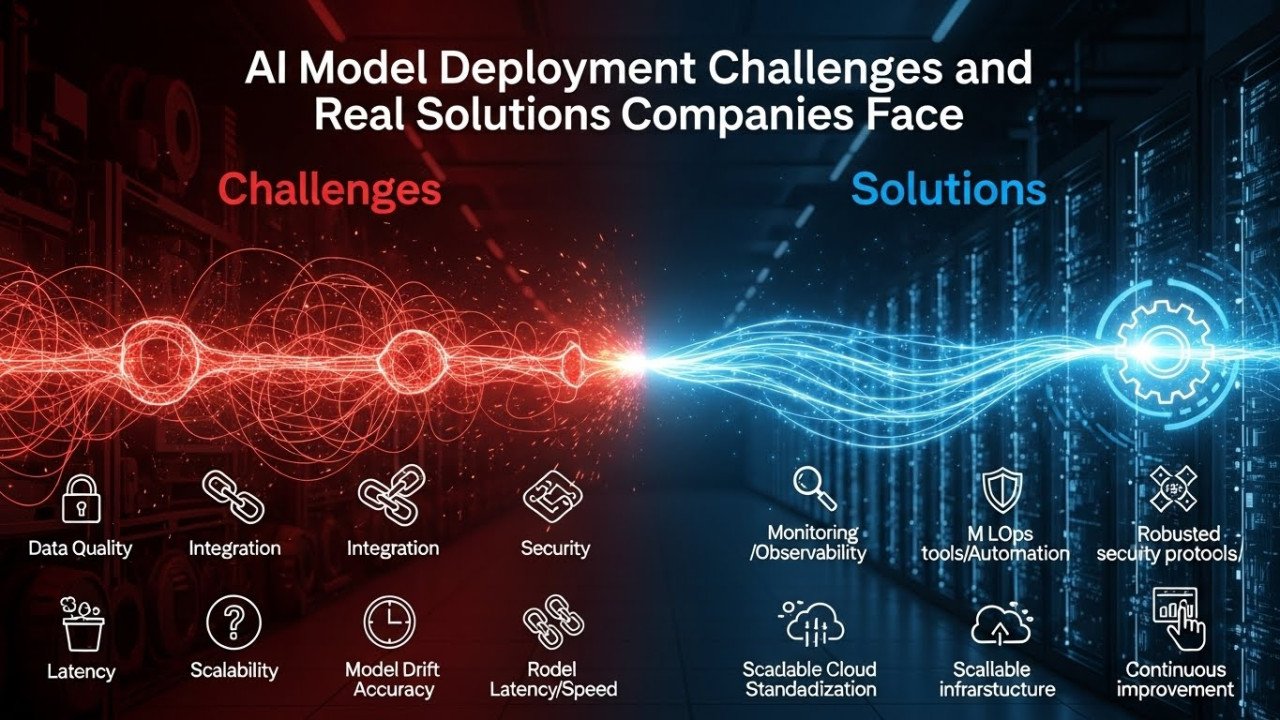
Common Challenges and Mitigation Strategies
Data Quality and Accuracy Issues
AI systems require quality input data to function effectively. Inaccurate, incomplete, or inconsistent data produces unreliable outputs that damage rather than support decision-making.
Mitigation strategies: Standardize data entry formats, maintain clean databases before AI implementation, train staff on data quality importance, and audit AI outputs before relying on them for consequential decisions.
Employee Resistance and Change Management
Employees sometimes resist AI adoption due to job security concerns, unfamiliarity with new tools, or frustration with implementation friction.
Mitigation strategies: Communicate transparently that AI augments rather than replaces human judgment, invest in training enabling comfortable tool use, start with popular use cases building momentum, and involve employees in implementation planning.
Integration and Workflow Disruption
Poorly integrated AI tools disrupt workflows rather than improving them, creating friction that undermines adoption.
Mitigation strategies: Select compatible tools with native integrations, pilot in limited scope before full rollout, allow sufficient onboarding time, and maintain human oversight enabling intervention if AI introduces problems.
Realistic Productivity and Financial Outcomes
Research and documented case studies demonstrate consistent patterns of AI impact on small businesses:
Productivity gains of 25-40% on targeted functions: Customer service response time improves 40-50%, inventory management efficiency increases 60%, marketing content production accelerates 50-70%.
Cost savings of 20-30% in operations: Staff hours reduced through automation, contractor expenses eliminated, error rates decreased reducing rework.
Revenue growth of 10-20% through improved operations: Faster response times improve customer satisfaction, better inventory management reduces stockouts, improved service delivery expands customer lifetime value.
Overall business productivity increases of 100-133%: The most comprehensive metric, reflecting cumulative impact across multiple functions.
Return on investment of 500-1000%+: Small investments in free tools complemented by selective paid tool adoption generate outsized returns within 12 months.
Conclusion: The Window for Zero-Cost Competitive Advantage
The convergence of free AI tools becoming genuinely capable, commodity pricing for premium tools, and documented productivity improvements creates a bounded window of opportunity for small businesses. As AI becomes foundational infrastructure, competitive gaps between adopters and non-adopters will widen permanently. Yet the barrier to entry has never been lower: a small business can implement comprehensive AI capability within days using entirely free tools, measure impact over 90 days, and expand systematically based on proven results.
The most critical imperative is beginning now rather than waiting for perfect implementation knowledge or delaying until paid tools seem necessary. Small businesses starting with ChatGPT, HubSpot Free CRM, Zapier free tier, and Canva today will document productivity improvements within weeks that justify further expansion. Those delaying adoption, waiting for perfect tools, or assuming AI remains too complex for small operations will find competitive gaps widening as sophisticated competitors leverage these capabilities systematically.
The future of small business success in 2025 and beyond is powered by intelligent adoption of freely available AI capabilities, strategic investment in proven paid tools, and continuous optimization of workflows integrating AI to amplify human capability and focus on truly valuable work. The time to begin is now.



Comments (0)
No comments found