


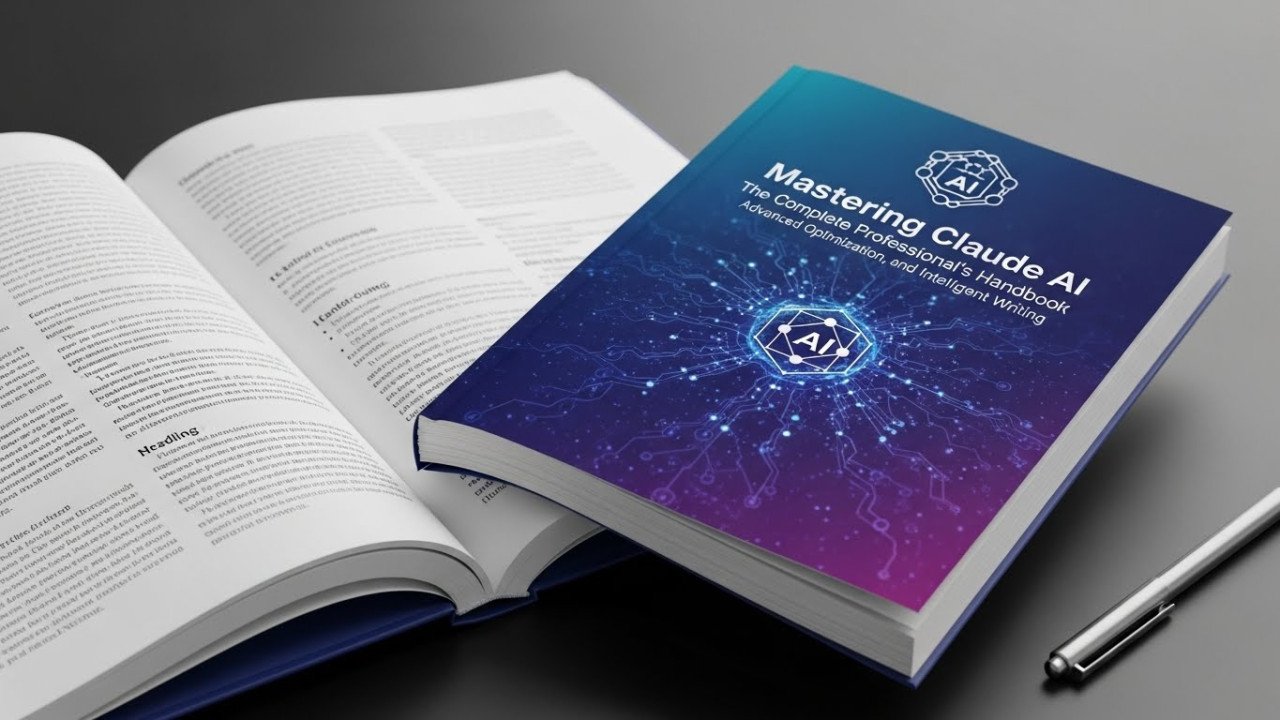
Mastering Claude AI 2026: The Professional's Guide to Research & Writing
Mastering Claude AI: The Complete Professional's Handbook for Advanced Research, Content Optimization, and Intelligent Writing
The landscape of artificial intelligence has undergone a fundamental transformation, and Claude represents one of the most sophisticated tools available for professional research and content creation. Unlike generic writing assistants, Claude combines exceptional comprehension capabilities with nuanced reasoning that allows professionals to accomplish significantly more complex work in dramatically less time. Whether you're a content strategist seeking to optimize SEO performance, a researcher wrestling with information synthesis, or a business professional crafting high-stakes communications, understanding Claude's architecture and mastery techniques has become genuinely consequential.
This comprehensive guide explores Claude's capabilities through a professional lens, providing actionable frameworks for leveraging its power in real-world applications while maintaining the highest standards of quality and originality.
Understanding Claude's Foundational Architecture and Why It Matters
Claude operates fundamentally differently than earlier-generation language models. Where traditional AI systems generate responses by predicting statistically probable next words, Claude employs advanced neural network architectures specifically engineered for contextual comprehension and nuanced reasoning.
The model was developed by Anthropic with deliberate emphasis on what researchers call "constitutional AI"—a training methodology designed to produce outputs that align with human values, refuse harmful requests, and maintain factual accuracy even when pressed with misleading prompts. This architectural distinction matters profoundly for professional applications because it means Claude's responses carry demonstrably lower hallucination rates and higher factual consistency compared to alternatives.
Claude's extended context window represents another crucial distinction. The system can process up to one million tokens of input—approximately 150,000 words—maintaining coherence and consistency across that entire span. For professionals handling complex projects involving extensive research materials, financial documents, customer transcripts, or lengthy manuscripts, this capacity eliminates the fragmentation that plagued earlier tools requiring multiple separate sessions.
The model's multilingual proficiency extends beyond mere translation. Claude maintains semantic accuracy across languages, understands cultural context, and can recognize when direct translation loses meaning, adapting language appropriately for different audiences and cultural contexts.
Projects and Artifacts: The Productivity Revolution
Two recent feature additions fundamentally changed Claude from a conversational tool into a professional workspace: Projects and Artifacts.
Projects: Building Persistent Context
Projects solve one of professional AI's most significant frustrations: the reset problem. In traditional chatbot interactions, each new session began with zero context. Professionals repeatedly re-explained their requirements, company background, style preferences, and project goals—a workflow friction that accumulated dramatically across weeks and months.
Projects transform this dynamic by creating persistent workspaces where context endures. Upload your brand guidelines once; they remain accessible for every subsequent project. Share your company's tone of voice documentation; Claude references it automatically. Store your research materials, competitor analyses, or strategic frameworks; they become the foundation for all future outputs within that project.
For content teams, this means establishing once—then creating thousands of times with perfect consistency. A marketing manager uploads brand voice examples and guidelines, then for months afterward, every Claude output maintains that specific tone without manual reinforcement. A researcher loads a collection of academic papers and methodological frameworks, then conducts analysis with those materials always available as context.
The business efficiency gain proves substantial. Teams report that Projects reduce context-setting time by 80-90% compared to traditional chat interfaces, allowing professionals to focus on strategic direction rather than repetitive explanation.
Artifacts: Separable, Shareable Deliverables
Artifacts represent Claude's answer to a practical frustration: outputs becoming buried in conversation scrollback, formatting degrading when copied between applications, and code losing execution context when extracted manually.
When you request that Claude generate a formatted document, interactive tool, code snippet, or specialized application, it can render this in a separate artifact window—a self-contained, immediately usable deliverable that persists independently of the conversation.
This distinction changes professional workflows meaningfully. A financial analyst requests that Claude build an interactive dashboard analyzing quarterly performance metrics. Rather than describing what they see in text or struggling with screenshot formatting, Claude generates a fully functional, interactive HTML artifact they can immediately share with executives—requiring no additional refinement or technical translation.
A web developer needs to create a React component implementing a specific design. Claude generates the artifact; they can test it immediately within the interface, request modifications conversationally, and deploy it directly—eliminating the context-switching between chat, code editor, and testing environment.
Content creators particularly benefit. Ask Claude to generate a formatted blog post outline structured specifically for SEO, and it appears as an immediately shareable artifact. Request an interactive quiz for engagement, and it renders with full functionality. This transforms Claude from a writing assistant into a complete production tool.
Advanced Prompting Techniques for Professional Excellence
The difference between mediocre Claude outputs and exceptional ones often stems not from model limitations but from prompting sophistication. Professionals who master advanced prompting techniques unlock dramatically superior results across every domain.
Diagnostic Analysis Before Generation
Counterintuitively, the most effective approach to professional writing often begins with analysis rather than generation. Instead of asking Claude, "Write me a better version," the framework should be:
"Before making any changes, analyze this manuscript comprehensively. Identify what it's genuinely about. Where does it lose energy? Which sections repeat unnecessarily? What's the core thesis that needs strengthening?"
This diagnostic-first approach works because Claude's pattern recognition excels at identifying structural problems, narrative weaknesses, and emotional arcs that even experienced professionals miss. Once Claude articulates these insights, the actual rewriting becomes directed improvement rather than unfocused revision.
For business communications, this means uploading a client proposal and asking Claude to assess whether it actually addresses the client's primary concerns or whether it emphasizes features they don't care about. For research synthesis, it means requesting Claude identify contradictions between sources before generating conclusions.
Chain-of-Thought Prompting for Complex Reasoning
For sophisticated analytical work—competitive analysis, strategic planning, complex problem-solving—Claude performs substantially better when explicitly guided through reasoning steps. Rather than requesting immediate conclusions, the framework becomes:
"Work through this systematically. First, identify all assumptions underlying the current approach. Next, evaluate the validity of each assumption based on the data provided. Then, determine which assumptions, if invalidated, would fundamentally change the conclusion."
This structured approach improves accuracy measurably because Claude's reasoning process unfolds transparently, allowing professionals to evaluate logic at each stage rather than accepting conclusions as opaque outputs.
Contextual Role Definition
Claude adapts exceptionally well to specified professional contexts. Rather than generic instructions, explicitly defining the role improves coherence significantly:
"You are a senior investment analyst at a Fortune 500 asset management firm reviewing this quarterly report. Frame your analysis for institutional investors concerned primarily with earnings stability and cash flow generation."
versus the weaker version: "Analyze this quarterly report."
The first prompt guides Claude's framing, priorities, and communication style to match the specific professional context. This generates outputs that genuinely feel like they originated from domain expertise rather than generic AI reasoning.
Structured Input Formatting
Claude processes information more effectively when presented in structured formats rather than unstructured narrative prose. Using XML tags, markdown formatting, or clear section delineation improves comprehension and output quality noticeably:
<context>
<company>TechCorp Inc.</company>
<industry>Enterprise Software</industry>
<challenge>Customer churn rate increased 15% year-over-year</challenge>
<data_provided>
- Q3 NPS scores: 42 (down from 48 Q2)
- Customer interview transcripts (12 interviews)
- Usage analytics from churned customers
</data_provided>
</context>
<task>
Identify root causes of customer dissatisfaction and propose retention strategy.
</task>
<constraints>
- Focus on factors within our control (not competitor comparison)
- Prioritize by implementation speed
</constraints>
This structured approach yields outputs demonstrably more targeted and sophisticated than the same information presented as paragraph prose.
Content Creation and SEO Optimization with Claude
For content professionals, Claude's capabilities extend far beyond basic writing. Understanding how to leverage its research depth, semantic awareness, and reasoning capabilities generates content that ranks while maintaining human authenticity.
Layered Content Construction
Rather than requesting complete articles in single prompts, sophisticated practitioners build content in strategic layers. First pass establishes structure and arguments. Second pass adds depth and examples. Third pass optimizes for search intent and keyword integration. Fourth pass refines voice and readability.
This iterative approach allows Claude to excel at what it does best—progressive refinement—while maintaining professional oversight at each stage. The result feels significantly more intentional and human-crafted than articles generated as monolithic outputs.
Semantic SEO Versus Keyword Stuffing
Google increasingly favors content demonstrating genuine expertise over keyword density manipulation. Claude excels at semantic SEO—naturally integrating related concepts, supporting terminology, and contextual language that signals authority to search algorithms while maintaining reader engagement.
Rather than requesting keyword density targets, the superior approach involves:
"This article targets professionals attempting to implement remote team management for the first time. They likely search using phrases like 'managing remote teams,' 'distributed workforce challenges,' and 'remote leadership strategies.' Ensure the article demonstrates expertise by discussing real implementation scenarios, common mistakes, and contingency planning—using terminology these professionals would naturally encounter in industry discussions."
This guides Claude toward semantic richness that search engines reward while preserving authentic, helpful content that readers genuinely value.
Featured Snippet and AI Overview Optimization
With Google increasingly displaying AI-generated overviews and featured snippets, structuring content specifically to capture these high-value positions has become strategically important. Claude can optimize for these when prompted appropriately:
"When explaining processes, use numbered lists with each point being a complete, standalone thought—search engines extract these for featured snippets. When introducing key terms, format definitions as: 'Term: One-sentence clear definition.' Follow with elaboration in regular paragraphs."
This structural guidance trains Claude to format content in ways search algorithms naturally extract and promote.
Advanced Research Synthesis and Information Management
Professional researchers quickly discover that Claude's ability to process enormous volumes of information while maintaining analytical coherence represents one of its most valuable capabilities.
Competitive Intelligence Synthesis
Upload competitor websites, marketing materials, and financial filings. Request Claude analyze them not as separate documents but as a unified competitive landscape:
"Analyze these five competitor approaches to market positioning. Identify where they overlap, where they differentiate, what gaps exist in their messaging, and which customer segments each appears to be targeting. Highlight the positioning strategies they're NOT using that might represent opportunity."
Claude synthesizes patterns across numerous sources simultaneously, identifying strategic gaps and opportunities that emerge from comparative analysis rather than individual document examination.
Research Material Organization
For professionals managing research projects spanning dozens or hundreds of sources, Claude excels at meta-analysis—analyzing patterns across the corpus rather than individual papers:
"From these 47 research papers on remote work productivity, identify the most consistent findings across studies. Where do studies disagree? Which findings appear robust versus those limited to specific contexts? What methodology limitations might explain disagreement?"
This approach transforms extensive research into synthesized insights far more efficiently than manual literature review.
Professional Writing Enhancement and Refinement
Claude's writing capabilities extend well beyond content generation into sophisticated editing and enhancement. Understanding how to leverage these capabilities produces genuinely superior professional communications.
Editorial Analysis Framework
Rather than requesting rewrites, request Claude perform detailed editorial analysis:
Coherence Analysis: Where does the argument lose logical flow? Are transitions effective?
Audience Assessment: Does this resonate with the intended audience? What assumptions might alienate readers?
Structural Critique: Are your major points weighted appropriately? Does emphasis align with importance?
Tone Evaluation: Does the voice match the communication context? Are there jarring tonal shifts?
This analytical approach generates specific, implementable feedback rather than generic "improve this" suggestions.
Iterative Refinement Within Context
Keep editorial conversations within single project threads rather than starting new chats. Claude maintains conversation memory, understanding earlier editorial decisions and maintaining consistency as documents evolve. Request changes incrementally:
"Make the introduction punchier while maintaining credibility."
"These two sections repeat similar points. Merge them while preserving both unique elements."
"The conclusion feels rushed. Expand it to approximately double length while maintaining the same core message."
Each iteration builds on previous context, producing refinement that feels intentional and coherent rather than serial revisions that lose thread continuity.
Specialized Professional Applications
Financial Analysis and Reporting
Upload financial statements, shareholder letters, and industry benchmarks. Claude can conduct comparative analysis, identify trends, assess financial health, and draft sophisticated financial communications that require both technical accuracy and stakeholder communication sophistication.
Legal and Compliance Documentation
Upload regulatory requirements, company policies, and relevant precedents. Claude assists with compliance documentation, policy drafting, and risk analysis—always with the explicit understanding that professional review remains essential for legally consequential documents.
Technical Documentation and Code Explanation
Upload codebases and request Claude generate documentation explaining functionality, architectural decisions, and usage guidelines. This capability proves particularly valuable for knowledge transfer when experienced developers transition responsibilities.
Market Research and Strategic Analysis
Provide market data, competitor information, and industry trends. Claude synthesizes this into strategic analysis identifying opportunities, threats, and inflection points—analytical work that would otherwise require extensive consultant hours.
Avoiding Common Pitfalls and Maintaining Quality Standards
Hallucination Mitigation
Claude occasionally generates plausible-sounding but incorrect information—"hallucinations." Professionals should:
Request sources for factual claims
Verify statistics against original documents when stakes are high
Use Claude for synthesis and analysis rather than factual retrieval for novel information
Implement review processes when outputs affect decisions
Maintaining Originality
The most common mistake professionals make involves outsourcing thinking rather than using Claude as a thinking partner. Exceptional results emerge when professionals:
Provide their own analysis and research as input rather than requesting pure generation
Use Claude to extend, challenge, or refine their own ideas
Maintain editorial judgment about what's actually valuable
Brand Voice Preservation
While Claude adapts well to specified tones, maintaining authentic brand voice requires active management. Professionals should:
Provide extensive examples of desired voice and tone
Maintain editorial standards across outputs
Treat Claude as a tool enhancing human creativity rather than replacing judgment
Setting Up Claude for Maximum Professional Productivity
Custom Instructions and System Prompts
Before launching projects, establish foundational context through custom instructions:
You are assisting a [role] working in [industry]. You understand that [key business context].
When responding to requests, prioritize:
1. [Primary value]
2. [Secondary value]
3. [Practical applicability]
Always maintain [specific tone/voice characteristics].
Flag any uncertainties or areas requiring professional judgment. Never overstate confidence in analysis.
Project Initialization Framework
When establishing Projects, include:
Brand guidelines and voice examples (multiple examples demonstrating range)
Company context and strategic priorities
Key research materials relevant to the project
Previous work samples or precedent documents establishing desired standards
Specific output formats and requirements
Prompt Library Development
Document successful prompts that generate exceptional results:
Save prompts that consistently yield high-quality outputs
Note context that improved results—specific information, framing, or instructions
Build a portfolio of prompts organized by use case
Periodically review and refine prompts based on evolving needs
Frequently Asked Questions: Professional Claude Implementation
How does Claude compare to ChatGPT for professional work?
Both excel in different domains. Claude typically outperforms on writing quality, analytical depth, and maintaining context across extended documents. ChatGPT excels on real-time information integration and voice-interactive features. The optimal strategy employs both tools, selecting the right one for each task.
Can Claude handle confidential business information safely?
Claude conversations are encrypted and Anthropic maintains strong privacy policies. However, professionals should verify their organization's data policies before uploading sensitive information. Some organizations implement Claude through private API deployments for enhanced security.
How do I ensure Claude-generated content doesn't plagiarize existing work?
Provide Claude with original source material rather than requesting pure generation. This approach ensures outputs build on your own research and thinking rather than remixing external content inappropriately.
What's the best way to transition a team to Claude-based workflows?
Start with individual adoption for specific, lower-risk tasks. Document successful workflows. Train team members on advanced prompting techniques. Establish quality review standards and gradually expand adoption as confidence grows.
Can Claude completely replace professional writers or researchers?
No. Claude excels as an enhancement tool, amplifying human expertise and productivity. Professional judgment, creativity, and accountability remain irreducibly human responsibilities. The optimal use case positions Claude as extending human capability rather than replacing it.
How does Claude handle specialized industry knowledge?
Claude's training includes substantial domain-specific information across industries. However, for cutting-edge industry developments or highly specialized niches, professionals should verify Claude's understanding against authoritative sources and supplement with current industry materials uploaded to projects.
What's the learning curve for mastering Claude's advanced features?
Basic usage proves immediately intuitive—many professionals achieve results with minimal learning. Advanced mastery of prompting techniques, project architecture, and specialized applications requires 20-40 hours of deliberate practice and experimentation. Most professionals discover productivity gains accelerate substantially after this investment.





Comments (0)
No comments found